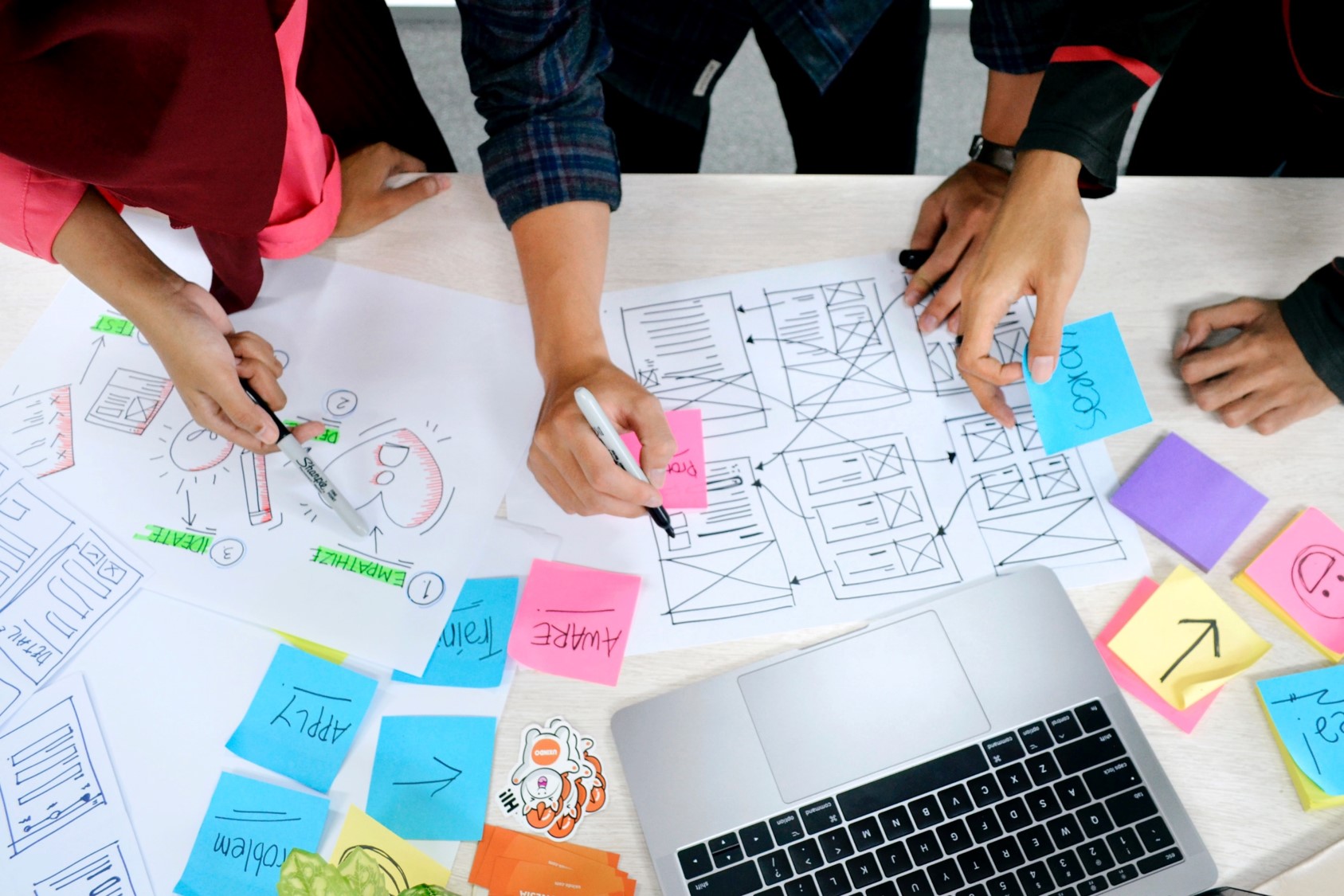
Image attribution: Manchester Metropolitan University
Earlier today I participated in University of London’s Centre for Online Education’s ‘Becoming a Learning Designer‘ webinar. Credit to the organisers for raising an unquestionably hot-topic currently. After all, we have seen the demand of designing and developing digital learning grow exponentially in the last decade, and moreover since the pandemic. The webinar’s registration page says the popular Higher Education jobs site, jobs.ac.uk has reported a sevenfold increase in listings of jobs relating to ‘digital learning’ since 2012, and certainly a topic that me and my colleagues have been trying to define when visioning a soon to be digital learning design/development unit function that will feed into one of the Faculty’s R&I strategic directions.
The hour long webinar was hosted by Senior Instructional Designer, Leonard Houx, who had invited a large interesting and varied mix of people from around the world and the panel discussed the following questions little under one hour. The time of the webinar was set surprisingly at 9am; a tricky time to attend, when there are day job demands, however the webinar generally was interesting watching and the time did go fast. I wondered whether more time should have been allocated with an eight person panel, however, I don’t think as many people (>100 participants) would have signed-up initially if the session was advertised as anything more than 60 mins. Nevertheless, questions that were put to the panel were:
- What do Learning Designers (LD) do?
- What skills do they need?
- How do they get hired?
I will put up a link to the recording here when it becomes available, however below are some brief excerpts, soundbites and notes that I took for myself, but would undoubtedly help folks in my network if they don’t have the time to watch the entire webinar.
What does a LD do?
- A LD partners with subject matter experts to co-create learning.
- The LDs role is diverse, and no catch-all profile. No wonder they complain of not having role clarity. It’s because the role is wide and varied and constantly evolving.
- Edinburgh’s LD Service comprises of Instructional Designers and Learning Technologists.
- LDs simplify the complex. Always thinking of the simplest way of getting ‘there’.
- They bridge the gap [between technology and education] and streamline.
- There is alway an insane amount of stakeholder management, not least with academics, who are used to doing things in a certain way.
- The main attribute of an LD is curiosity.
What skills and attributes does a LD need to have?
- LDs should have an understanding of learning from a theoretic and practical level.
- Be able to influence and form a pitch in how they’re able to help.
- Be willing to collaborate with academics. No one needs a bull in a china shop.
- Should have curiosity, love to learn, and solve different problems everyday.
- LDs should use STAR (Situation, Task, Action, Results) to present a good way to give examples of your impact and demonstrate what you can do for a client.
- LDs should have an appreciation of the interplay between education and technology.
- Become a student of a course, any online course, to experience the rich environment. You will feel the emotions of an online learner. Then critically evaluate.
- You will need to wear lots of hats such as a communicator, consultant, advisor, problem solver, relationship manager.
- Human-centred. Be curious about the way staff teach and the way students learn.
- Trusted and trusting. In deep intimate and creative relationships, trust goes both ways.
- To know how to ask an expert to open up, about what they know and what they might not know, as this can be delicate.
How do they get hired?
- Be open about what work you can do, and what you may need development for, as the aspect of the role is not a settled answer; the Internet has been with us for a generation, but we’re still learning how to contend and get the most from it.
- There are alot of nervous academics, that still lack confidence with using technology. Therefore, LDs need to bring certainty and an open mindedness.
- Show the technical sides (there are 2 parts: digital and education) and the people side (soft skills).
- Have the ability to attention to detail.
- Know that diversity of experience is a strength.
- Be influential without ruffling feathers.
- Be flexible in approach – 1:1s and workshops
- Have demonstrable impact in an institution. Show data/stats of what impact you brought about looks like.
The above was some points that I skimmed from the webinar. If you happen to pick up any points please add them to the comments to these posts.

 LearnViaTech